
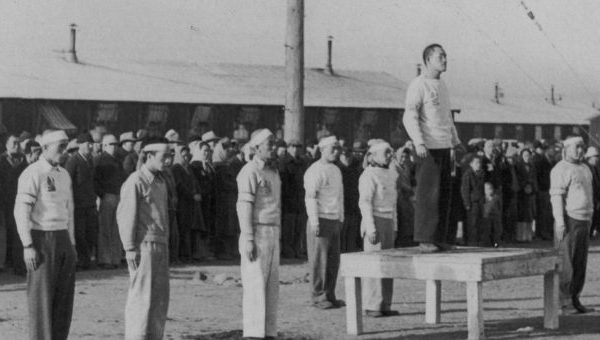
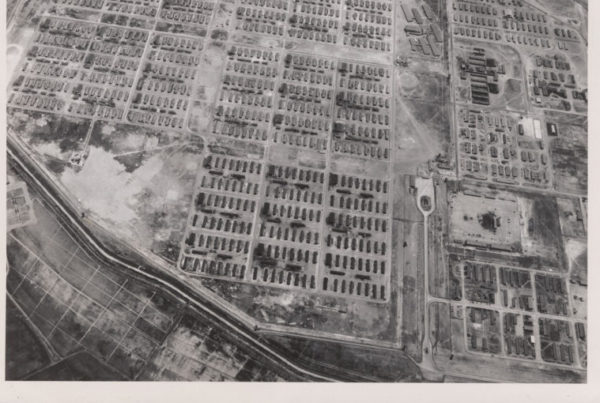
Tule Lake was the largest of the World War II incarceration camps for Japanese Americans, where the United States segregated thousands of incarcerees falsely designated as “disloyals.” But this camp was also the site of some of the most heroic acts of resistance to the most heroic acts of resistance by Japanese Americans took place. At a key point in Enemy Alien I discover how the resistance at Tule Lake resonates with the protests Farouk organized with his fellow detainees.
Tule Lake was the largest of the World War II incarceration camps for Japanese Americans, where the United States segregated thousands of incarcerees falsely designated as “disloyals.” But this camp was also the site of some of the most heroic acts of resistance to the most heroic acts of resistance by Japanese Americans took place. At a key point in Enemy Alien I discover how the resistance at Tule Lake resonates with the protests Farouk organized with his fellow detainees.
So it was really meaningful for me to go on the Tule Lake Pilgrimage, which has been organized every year or two years since 1974. I was nervous about how the survivors of the camp would feel about my incorporating the Tule Lake experience in the film, since it was a particularly painful and divisive chapter of the WW2 incarceration whose aftermath has lasted to this day. But the people there embraced the film at two screenings. And the pilgrimage itself was a life-changing experience. The feeling of bonding with community was powerful, almost overwhelming, an unstoppable opening up of memories and tear ducts as three generations of Japanese Americans gathered in small and large settings over three days, sharing stories and feelings everywhere — on the bus, in small breakout groups, in great gathering halls, in the cafeteria.
As a documentarian I was excited to learn there were how many important first-hand storytellers from Tule Lake were still alive, including members of the members of the Hoshi Dan (or Hokoku Seinen Dan), a young men’s militant group that openly adopted a pro-Japan attitude in protest. I started gathering contacts for developing a documentary on this relatively unknown but deeply significant chapter of American history. The more I learn about what happened at Tule Lake, the more it informs the social issues that most grip our politics today: “national security,” immigration, racial conflict and extremism.

Recommended For You
RESISTANCE AT TULE LAKE Now Available on iTunes and Consumer DVD
Konrad AdererOctober 25, 2018